
Services
Eating Disorder Therapy for Athletes
The specialty within the specialty. Disordered eating, underfueling, and RED-S in competitive athletes, treated by someone who has been one.
Sport can hide an eating disorder in plain sight
It is not uncommon for mental health issues to be overlooked in athletics, and sometimes they are quietly revered. I can recall several moments in my own athletic career that reinforced the idea that thinner is better for performance.
That idea gets planted like a weed in an athlete's mind and consumes their psyche. Now you have an athlete spending most of their brain power on calories in versus calories out, body image, and comparison, rather than on strength, technique, rest, school, relationships, and fun. Now you have an athlete who is sick.
The sickness often goes undetected, or gets perpetuated and even encouraged, consciously or not, by people in the athlete's environment. The same behaviour that would worry everyone in a non-athlete gets praised as discipline in a competitor.
With the right awareness and intervention, an athlete and their support system can name the illness and move toward healing. That is what this page, and this part of my practice, exists for.
What this covers
Where sport and eating disorders intersect
Relative Energy Deficiency in Sport
RED-S is what happens when energy intake does not meet the demands of training. It affects hormones, bone density, immunity, mood, and performance itself, and it is frequently missed because the athlete is still competing.
Underfueling and low energy availability
Often unintentional. Busy schedules, early practices, and appetite suppression from hard training add up to an athlete who is running a deficit without deciding to.
Weight class and aesthetic sports
Wrestling, rowing, gymnastics, figure skating, diving, and distance running all carry structural pressure toward a body type. Awareness is protective; silence is not.
Return to sport after treatment
Coming back is its own phase, with its own risks. We plan for it deliberately rather than treating discharge as the finish line.
Signs worth taking seriously
What coaches, parents, and athletes miss
None of these confirms an eating disorder on its own. Several of them together is a conversation worth having.
- Performance plateauing or declining despite harder training
- Recurrent stress fractures or injuries that will not heal
- Missed or irregular periods
- Feeling cold constantly, or unusually fatigued
- Rigid food rules that travel and compete with the team
- Anxiety or guilt on rest days
- Withdrawal from team meals and social eating
- Preoccupation with teammates' bodies or intake
Credentials that matter here
This is what I trained specifically to do
I completed my post-doctoral residency at McCallum Place Eating Disorder Centers, specializing in the treatment of athletes with eating disorders, after a pre-doctoral internship at Lehigh University focused on sport psychology.
And before the training
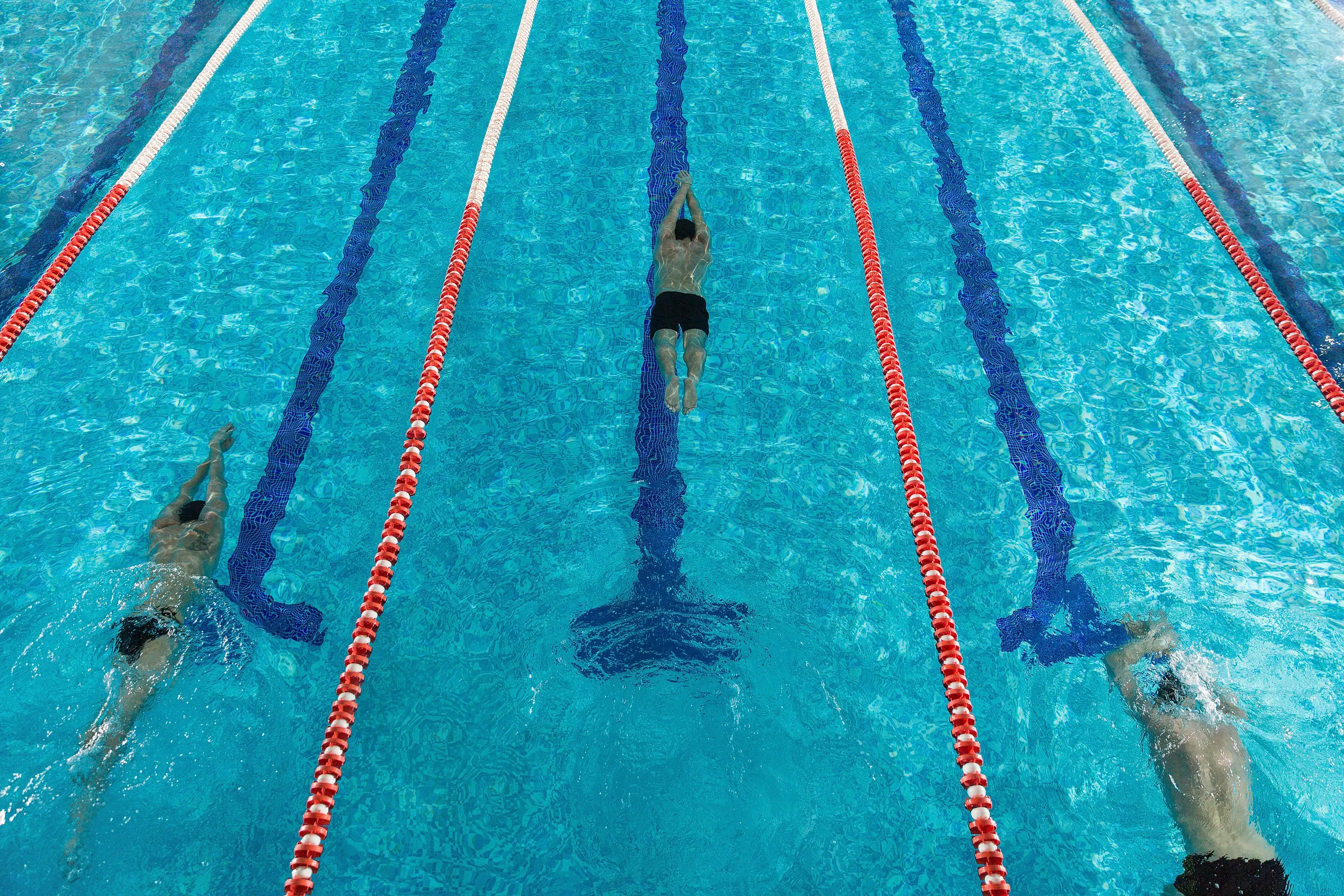
I was a competitive swimmer for years. I know the 5:00 am alarm and the 8,000 yard practice. I know what it is to measure your worth in numbers, and to keep chasing a time that stayed just out of reach.
That does not make me your coach, and I will not pretend to know your sport better than you do. It does mean you will not have to explain the culture to me first, or justify why leaving it feels like grief.
Working with your team
With your consent, I coordinate with the people already around you: physicians, dietitians, athletic trainers, and where appropriate, coaches and family. Athlete eating disorder care rarely works as a solo effort.
I also speak to teams, coaching staffs, and parent groups on prevention and early intervention, because the people who see an athlete daily are better positioned to notice than I am once a week.

Underfuelling
The performance argument, turned around
Athletes are rarely persuaded by health alone. They are persuaded when they see what underfuelling has quietly been costing the performance itself.
A successful athlete is a healthy and happy athlete, and at the end of the day, an athlete is a person first.
For athletes and their people
RED-S, fueling, and getting help
Relative Energy Deficiency in Sport is what happens when you are not taking in enough energy for the training you are doing. It affects hormones, bone density, immune function, mood, and performance, and it frequently goes unnoticed because the athlete is still training and still competing.

A successful athlete is a healthy athlete
If something in your fueling or your relationship with your body has stopped feeling right, let us talk about it.
Book a free consultation